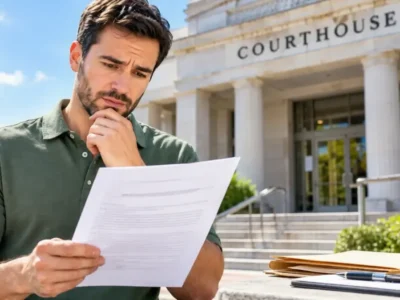

Yes — in many states a business can sue in small claims court. Sole proprietors, partnerships, LLCs, and corporations may be allowed to file, but the applicable dollar limits, representation rules, filing caps, and procedures can differ from those that apply to individuals. Small claims court is commonly used for unpaid invoices, completed work that was not paid, property damage, and other commercial disputes that fall within the court’s jurisdictional limit.
Because rules vary significantly by state and by entity type, the safest approach is to treat any national summary as a starting point only. Always verify the current requirements with the court where you intend to file.
Which Business Structures Can Generally File
Sole Proprietors
A sole proprietor is generally treated differently from a separate legal entity because the business and the owner are not legally separate in the same way an LLC or corporation is. In many states the owner files as an individual, sometimes using a DBA or fictitious business name (for example, “Jane Smith d/b/a Smith Consulting”). The exact filing name and claim limit depend on state and local rules. In some states, sole proprietors are eligible for the higher individual limit rather than a lower entity limit.
Partnerships
General partnerships may file in most states. Some courts accept the partnership name; others prefer or require the individual partners to be named. Confirm the preferred format with the clerk before completing the complaint.
Limited Liability Companies (LLCs)
An LLC may be permitted to appear through an authorized member, manager, employee, or other representative in some states, while other jurisdictions impose stricter representation requirements. Never assume that an LLC owner or employee can represent the company without checking the applicable small-claims rules. The LLC should be named exactly as it appears in the Secretary of State records.
Corporations
Corporations can file in many states, but this is the category with the greatest likelihood of special representation requirements. Some states allow an authorized officer or full-time employee to appear; others require a licensed attorney or place additional restrictions. A few states have historically limited corporate access to small claims court. Do not rely on general summaries — check the current rules for the specific court where you plan to file.
Filing Limits That May Apply
Some states impose limits on how many small claims a plaintiff may file during a given period. These restrictions may apply specifically to businesses or non-individual entities in some jurisdictions, while other states apply filing limits more broadly to any plaintiff.
Examples (verify current numbers locally):
- California — A plaintiff generally may file no more than two small claims actions seeking more than $2,500 during a calendar year. Claims for $2,500 or less are not subject to the same two-claim limit.
- Colorado — A plaintiff generally may not file more than two small claims in any county during a calendar month or more than 18 in that county during a calendar year. These limits are not necessarily business-specific.
- Nebraska — Limits exist on the number of claims a party may file per week and per year.
Dollar Limits for Business Filers
Most states apply the same jurisdictional limit to both individual and business plaintiffs. A few states set a lower limit for non-natural persons or other entities.
| State | Natural Person / Individual Limit | Other Entity Limit |
|---|---|---|
| California | $12,500 | $6,250 |
| Washington | $10,000 | $5,000 |
| Other states | Rules vary by state and entity type — check the applicable court rules | |
Who Can Represent a Business at the Hearing
Some states allow a business to appear through an owner, officer, partner, member, manager, or qualified employee without an attorney, but the permitted representative and required documentation vary by jurisdiction. In some courts a business entity may need a licensed attorney or may be limited to specific types of representatives.
Typical patterns (always verify locally):
- Sole proprietor: The owner
- Partnership: A general partner
- LLC: A member, manager, or authorized representative if the court permits it
- Corporation: An officer or authorized employee in states that allow it; otherwise a licensed attorney
How to Identify Your Business Correctly on the Complaint
Use the legal name and business-name format required by the court and applicable state law. The Secretary of State business search is often a useful verification source.
| Entity Type | Common Correct Format (Example) | Common Mistake |
|---|---|---|
| Sole proprietor with DBA | Jane Smith d/b/a Smith Consulting | Using only the trade name |
| LLC | Smith Consulting LLC (exact registered name) | Omitting “LLC” |
| Corporation | Smith Consulting Inc. (exact registered name and suffix) | Missing required suffix (Inc., Corp., etc.) |
| Partnership | Smith & Jones General Partnership (or as required locally) | Using an informal name only |
Can a Business Sue a Customer?
Yes, in many states a business can sue a customer in small claims court for qualifying money claims such as unpaid invoices, breach of contract, property damage, or dishonored checks, provided the claim is within the applicable dollar limit and other jurisdictional requirements are met. Venue, service, and evidence rules still apply.
Can a Business Be Sued in Small Claims Court?
Yes. In many states individuals and other businesses can bring qualifying money claims against a business in small claims court. The claim must fall within the court’s jurisdictional limit, and the business defendant must be properly served (often through its registered agent). Representation rules for the defendant business are governed by the same state-specific principles discussed above.
Common Business Claims in Small Claims Court
Unpaid Invoices
Helpful evidence typically includes the contract or work order, the invoice, proof of delivery or completion, prior payment demands, and a formal demand letter.
Breach of Contract
A customer who cancels without required notice or refuses delivery of ordered goods may be liable for resulting damages (often the contract price minus amounts mitigated).
Property Damage
Before-and-after photographs, repair estimates or invoices, and any agreement allocating responsibility are useful.
Dishonored Checks
Many states have specific bad-check statutes. The recoverable amount, demand requirements, waiting period, and any statutory penalty differ by state. Follow the statutory demand procedure carefully before filing.
Civil Recovery for Theft or Shoplifting
Some states authorize merchants to pursue civil recovery. These claims can have additional statutory requirements, including demand notices and deadlines. Confirm the current rule in your state.
Business Small Claims Filing Checklist
- ☐ Confirm your entity type is eligible in the court where you plan to file
- ☐ Confirm you have not reached any applicable filing limit
- ☐ Confirm the claim amount is within the dollar limit that applies to your entity type
- ☐ Verify your exact registered legal name
- ☐ Identify the correct legal name and registered agent for any business defendant
- ☐ Determine who will appear at the hearing and what authorization or attorney requirement applies
- ☐ Send a formal demand letter before filing
- ☐ Organize key evidence: contract or work order, invoice, proof of performance, payment history, and demand letter
Find Your State’s Rules for Business Filers
Business rules can change dramatically by state. Before filing, use our state-by-state small claims guides to check the claim limit, filing requirements, venue, service rules, and representation requirements that apply to your business. Start with the By State menu.
Related guides:
- How to Write a Demand Letter
- What Evidence to Bring to Small Claims Court
- Small Claims Court Filing Fees — All 50 States
Sources
- California Courts Self-Help Center and California Code of Civil Procedure §§ 116.220–116.221 (limits for natural persons and other entities; filing limits)
- Washington Courts small claims guidance (natural person vs. other filer limits)
- Colorado Judicial Branch small claims rules and instructions (monthly and annual filing limits)
- Nebraska Judicial Branch small claims guidance (party filing limits)
- Official state court self-help materials and statutes governing business and entity plaintiffs, representation, and jurisdiction