
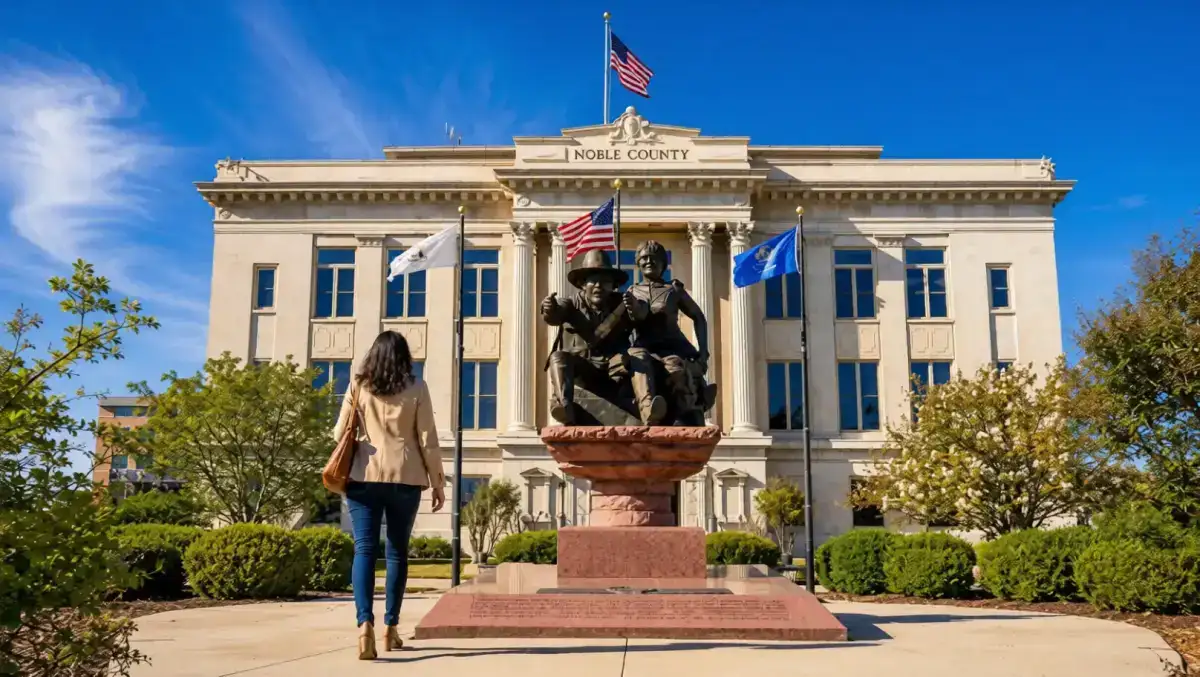
Oklahoma’s Small Claims Docket is a division of the District Court in each of the state’s 77 counties, governed by 12 O.S. §§ 1751 through 1773, with a jurisdictional ceiling of $10,000. That cap is genuinely absolute: unlike states that allow a plaintiff to voluntarily reduce a larger claim to fit the small claims limit, Oklahoma treats the $10,000 figure as a hard ceiling — reducing a claim to qualify permanently waives the excess amount, and you cannot recover it later in a separate action.
The single most distinctive feature of Oklahoma small claims practice, however, is where an appeal actually goes. Because the Small Claims Docket is already a division of the District Court itself — not a separate, lower-level court the way small claims is structured in most other states — there is simply no intermediate trial court to send an appeal to for a fresh hearing. Instead, an appeal from Oklahoma small claims goes directly to the Oklahoma Supreme Court, the state’s highest court, via a Petition in Error. And critically, this appeal right does not exist automatically: you must have arranged for a court reporter to record your original hearing, for a modest $50 fee, or there is simply no record for the Supreme Court to review — meaning no appeal is possible at all, regardless of how clear any legal error might have been. Oklahoma also offers something genuinely rare among the states in this guide series: a jury trial at the original small claims hearing itself, available whenever the claim or counterclaim exceeds $1,500. This guide covers the complete Oklahoma Small Claims Docket process — filing, the court reporter precondition that most self-represented plaintiffs never think to arrange, the jury trial option, and the collection tools available once you have a final judgment.
Oklahoma Small Claims — Fast Facts (2026)
- Claim Limit
- Up to $10,000 (hard cap, cannot voluntarily reduce)
- Court Name
- Small Claims Docket of District Court
- Filing Fee
- $42 – $80
- Appeal Destination
- Oklahoma Supreme Court — directly, not district court
- Appeal Precondition
- Court reporter must have recorded the hearing ($50 fee)
- Jury Trial
- Available at trial if claim/counterclaim exceeds $1,500
- Excluded Claims
- Libel and slander
- Debt Collection Agencies
- Barred from filing
- Post-Judgment Interest
- T-Bill rate + 2% (~6.5% in 2026) — § 727.1
- Real Property Lien Duration
- 5 years, renewable for 5 more — § 706
What Makes Oklahoma Small Claims Different
1. Appeals Skip District Court Entirely and Go to the State Supreme Court
This is the single most consequential structural fact about Oklahoma small claims practice. In most states covered in this guide series, small claims is a distinct, lower-level court — a Justice Court, Magistrate Court, or similar forum — and an appeal moves the case up to the “real” trial-level court (a District, Circuit, or Superior Court) for either a fresh trial or a record review. Oklahoma’s Small Claims Docket does not work this way: it is already a docket within the District Court, meaning there is no lower trial court left to escalate an appeal to. As a result, an appeal from Oklahoma small claims bypasses the intermediate level entirely and goes straight to the Oklahoma Supreme Court, following the same formal appellate procedure used for any other Oklahoma civil case. The process begins with a Petition in Error filed with the Clerk of the Supreme Court, and given the formality of this route, most appellants strongly benefit from hiring an attorney at this stage even if they represented themselves at the original hearing.
2. You Must Request a Court Reporter Before You Can Ever Appeal
Because an Oklahoma small claims appeal is a record review by the Supreme Court rather than a fresh trial, there must actually be a record to review. Any party may request a court reporter to attend and transcribe the original hearing, for a modest $50 fee — but this request must be made before or during the hearing itself. If no court reporter was present, there is no transcript, and the judgment simply cannot be appealed at all, no matter how clear the legal error might have been. Most self-represented plaintiffs and defendants have no idea this precondition exists until it is too late. If there is any realistic chance you might want to appeal — particularly for a higher-value claim close to the $10,000 ceiling — request a court reporter before your hearing begins.
3. A Jury Trial Is Available at the Original Hearing — Not Just on Appeal
Oklahoma is one of a small number of states that allows a jury trial at the small claims stage itself, rather than reserving jury trials only for an appeal (as Massachusetts does, covered earlier in this guide series). If the claim or counterclaim exceeds $1,500, either party may demand a jury trial in writing, filed with the clerk at least two working days before the scheduled appearance date, and must deposit fees to cover jury costs. Failing to request and pay for this before the deadline waives the right, and a judge alone will hear the case instead. Claims of $1,500 or less are always decided by a judge — no jury option exists at that level regardless of either party’s preference.
4. Libel and Slander Are Specifically Excluded — No Matter the Amount
Under 12 O.S. § 1751(A), Oklahoma small claims jurisdiction explicitly excludes libel and slander claims, regardless of how small the damages sought might be. This reflects the genuine legal complexity of defamation cases — which typically involve First Amendment defenses, difficult damages calculations, and specialized pleading requirements that do not translate well to the deliberately informal small claims process. If your dispute involves reputational harm from spoken or written statements, small claims court is not available to you in Oklahoma regardless of the dollar amount at stake; you must pursue this type of claim in the regular civil docket instead.
5. Debt Collection Agencies Cannot File in Small Claims
Oklahoma bars collection agencies from filing small claims cases — a consumer protection measure that echoes Washington State’s similar prohibition on debt buyers and collection agencies using the small claims forum, covered earlier in this guide series. If you are being sued in Oklahoma small claims court by a company that purchased your original debt rather than the original creditor itself, this restriction may be worth raising as a threshold question about whether the plaintiff is even eligible to use this particular court.
Oklahoma Small Claims Filing Fees (2026)
| Item | Cost |
|---|---|
| Filing fee (varies by claim amount) | $42 – $80 |
| Sheriff service | $50 |
| Private process server | Varies — confirm with server |
| Court reporter (to preserve appeal rights) | $50 |
| Jury trial deposit (if requested, claim over $1,500) | Additional fee — confirm with clerk |
Oklahoma offers statewide e-filing through the OSCN.net portal in all 77 counties — one of the most fully digitized small claims filing systems in the country, allowing self-represented filers to submit their case without an in-person courthouse visit in most circumstances.
Fee waiver: Ask the clerk about filing a Pauper’s Affidavit if you cannot afford the filing fee.
Step-by-Step: How to File in Oklahoma
Step 1 — Confirm Any Required Administrative Exhaustion
For certain claim types — most commonly employment discrimination — you may need to complete a process with an administrative agency before filing in Oklahoma state court, including small claims. This administrative process runs concurrently with, not instead of, your statute of limitations, so track both deadlines.
Step 2 — Send a Demand Letter
Oklahoma does not require a demand letter before filing, but Small Claims Docket judges expect to see one. This demand step is also formally recognized in Oklahoma practice as preceding the filing of the affidavit itself. Send it by certified mail with return receipt requested, and keep a copy and proof of mailing.
Step 3 — Confirm Your Eligibility and the Correct Venue
Any adult may file, and a minor’s parent or guardian may file on their behalf. You cannot file if you are currently in jail or prison. Businesses and corporations may also file. Confirm your claim does not involve libel or slander, which is excluded regardless of amount. File in the county where the defendant resides, or — for a contract dispute — where the contract was formed or where the alleged breach occurred, among other possible venue options depending on your specific case.
Step 4 — Complete the Small Claims Affidavit
Oklahoma’s initial filing document is called an “affidavit,” available through OSCN.net or your county courthouse. Include:
- Your name and address
- The defendant’s exact legal name and address
- The amount claimed (up to $10,000)
- A brief statement of your claim
Step 5 — File and Pay the Fee
File through OSCN.net e-filing or in person at your county courthouse, and pay the applicable fee ($42–$80). The clerk typically schedules the hearing within 10 to 30 days of filing.
Step 6 — Serve the Defendant
Under 12 O.S. § 158.1 and § 2004, service is completed by sheriff service ($50), certified mail with return receipt requested through the clerk (most common and least expensive), or a licensed process server. The defendant must be served before the trial date for the case to proceed.
Step 7 — Decide Whether to Request a Court Reporter and/or a Jury Trial
If there is any realistic possibility you may want to appeal, request a court reporter before your hearing — this is your only opportunity to preserve that right. Separately, if your claim or counterclaim exceeds $1,500 and you want a jury rather than a judge alone to decide the case, submit your written demand and required fee deposit at least two working days before your scheduled appearance date.
Step 8 — Prepare Your Evidence
Bring three copies of every document and all witnesses. Present evidence supporting your version of events and the specific dollar amount of your loss — in most cases, you must prove both that the defendant caused you harm and the precise amount needed to make you whole.
Step 9 — Attend the Hearing
Direct your argument to the judge (or jury), not to opposing counsel or the other party directly. After hearing both sides, the judge (or jury) issues a money judgment to whichever party proves their entitlement to an award.
How to Collect Your Oklahoma Small Claims Judgment
The court does not collect the judgment for you — enforcement is entirely your responsibility once the appeal window has closed. Given that Oklahoma’s enforcement procedures are described by multiple sources as “relatively complex,” many judgment creditors consult an attorney at this stage even if they handled the original trial themselves.
Step 1 — Execution (Personal or Real Property)
Governed by 12 O.S. § 731. Authorizes seizure and sale of the defendant’s non-exempt property to satisfy your judgment.
Step 2 — Wage Garnishment
Governed by § 1171. Capped at 25% of the debtor’s disposable earnings, or the amount by which disposable earnings exceed 30 times the federal minimum wage, whichever is less — the standard federal Consumer Credit Protection Act baseline. A writ of garnishment can require the debtor’s employer to withhold wages from each paycheck until the judgment is satisfied.
Step 3 — Bank Account Levy
A separate garnishment procedure is available against the debtor’s bank account once you know where they bank.
Step 4 — Asset Examination
If you do not know where the debtor works, banks, or holds property, you can ask the court to order them to appear for a hearing and answer questions under oath about their assets and income.
Step 5 — Real Property Lien
File a Statement of Judgment with the county clerk to create a lien on any real estate the debtor owns in that county, valid for 5 years under § 706, and renewable for an additional 5-year period before the original term expires.
Understand Oklahoma’s Exemption Protections
Certain assets are exempt from execution under Oklahoma’s exemption statutes — confirm current specific amounts before assuming a particular asset is available for collection.
Post-Judgment Interest
Interest accrues at the Treasury Bill rate plus 2% under § 727.1, recalculated semi-annually — running approximately 6.5% in 2026.
Motions to Correct or Vacate a Judgment
Under 12 O.S. § 1031.1, a party may move to correct, open, modify, or vacate a judgment within 30 days of its filing. Oklahoma courts explicitly disfavor default judgments, and judges retain discretion to promote justice even after a decision has been entered. Grounds for such a motion under § 1031 include mistake, fraud, procedural irregularity, or an unauthorized signature on a certified-mail return receipt (meaning someone other than the defendant improperly signed for service). Generally, a supporting affidavit demonstrating a meritorious defense is required alongside this motion. This is a distinct, narrower remedy from a full appeal and applies specifically to procedural or factual problems with how the judgment was entered — not simply disagreement with the outcome.
Oklahoma Statute of Limitations
| Claim Type | Period | Statute |
|---|---|---|
| Written contract | 5 years | 12 O.S. § 95 |
| Oral contract / open account | 3 years | 12 O.S. § 95 |
| Property damage | 2 years | 12 O.S. § 95 |
| Personal injury | 2 years | 12 O.S. § 95 |
| Libel / slander | Excluded from small claims entirely | 12 O.S. § 1751(A) |
Frequently Asked Questions — Oklahoma Small Claims Court
What is the small claims limit in Oklahoma in 2026?
$10,000 under § 1751 — an absolute, hard cap. Voluntarily reducing a larger claim to fit within this limit permanently waives the excess amount.
Where do Oklahoma small claims appeals go?
Directly to the Oklahoma Supreme Court, not to an intermediate district or circuit court, because the Small Claims Docket is already part of the District Court itself.
What must I do during the hearing to preserve my right to appeal?
Request a court reporter to record the proceeding (a $50 fee) before or during the hearing. Without this record, no appeal is possible afterward.
Can I get a jury trial in Oklahoma small claims court?
Yes, at the original hearing, if the claim or counterclaim exceeds $1,500 and you request it in writing at least two working days before your appearance date, with the required fee deposit.
How much does it cost to file in Oklahoma?
$42 to $80 depending on claim amount, plus $50 for sheriff service if used.
Can a debt collection agency file in Oklahoma small claims court?
No — collection agencies are barred from filing, similar to Washington State’s rule.
What is the statute of limitations for small claims in Oklahoma?
Written contracts: 5 years. Oral contracts/open accounts: 3 years. Property damage and personal injury: 2 years. Libel and slander are excluded from small claims regardless of amount.
How do I collect a judgment in Oklahoma?
Execution on non-exempt property, wage garnishment (25% cap), bank levy, or a real property lien valid for 5 years (renewable for 5 more). Post-judgment interest runs at Treasury Bill rate plus 2%, about 6.5% in 2026.
Can I file if I am currently incarcerated?
No — Oklahoma specifically bars filing while in jail or prison.
How long does a landlord have to return a security deposit?
45 days with an itemized statement, under 41 O.S. § 115.
Next Steps
- How to Write a Demand Letter
- How to Collect Money After Winning
- How to Respond If You Are Being Sued
- What Evidence to Bring to Small Claims Court
- Browse All 50 State Guides
Sources
- Oklahoma State Courts Network — Small Claims: oscn.net
- 12 O.S. §§ 1751–1773 (Small Claims Docket jurisdiction and procedure)
- 12 O.S. § 1751(A) (Jurisdiction — $10,000 limit; libel/slander excluded)
- 12 O.S. § 1755 (Attorney representation permitted)
- 12 O.S. § 1761 (Jury trial demand — claims over $1,500)
- 12 O.S. § 1770 (Appeal procedure)
- 12 O.S. § 1031, § 1031.1 (Motion to correct, open, modify, or vacate judgment)
- 12 O.S. § 95 (Statute of limitations — contracts, property damage, personal injury)
- 12 O.S. § 158.1, § 2004 (Service of process)
- 12 O.S. § 731 (Execution)
- 12 O.S. § 1171 (Garnishment)
- 12 O.S. § 706 (Real property lien — 5 years, renewable)
- 12 O.S. § 727.1 (Post-judgment interest — Treasury Bill rate + 2%)
- 41 O.S. § 115 (Security deposit — 45-day return)
- FindLaw — Oklahoma Small Claims Courts (Supreme Court appeal, court reporter requirement)
- LegalClarity — Small Claims Court Rules in Oklahoma
- Oklahoma County District Court — Small Claims FAQs
- Fort Sill Legal Assistance Office — Small Claims Court in Oklahoma