If you’re counting on your own uninsured motorist coverage to pay for your car, check your policy closely first — in most states, uninsured motorist coverage pays for injuries, not property damage. That gap is exactly why small claims court becomes the real option when the driver who hit you won’t pay and doesn’t have insurance to cover it either.
This guide covers who to actually name as a defendant, the insurance gap most people don’t find out about until it’s too late, what to do without a police report, and how to think realistically about actually collecting once you win.
Who Do You Actually Sue?
Name the driver, and separately name the registered owner of the car if that’s a different person — a parent whose teenager was driving, an employer whose employee was driving a company vehicle, or a rental company. Sue both where they differ; it doesn’t cost you anything extra, and it means you’re not stuck if it turns out the driver has no assets but the owner does.
What you don’t sue is the insurance company. It wasn’t driving the car, and it isn’t a party to your case, even though it’s the entity that will often actually cut the check if the other driver is insured.
The Insurance Gap Most People Don’t Know About
If you don’t carry collision coverage, or your state doesn’t offer the property-damage add-on, suing the other driver directly in small claims court becomes your primary path to recovering the repair cost.
Before You File — Demand Payment First
Send a written demand for payment before you file; some states require you to confirm you’ve done this as part of your complaint. If the other driver has already admitted fault in a text message — “sorry, I’ll pay for it” or similar — hold onto that message. A statement from the other side, used against them, is some of the strongest evidence you can bring; see our guide on text messages as evidence for how to present it properly.
Evidence to Bring
- The police report, if one was filed
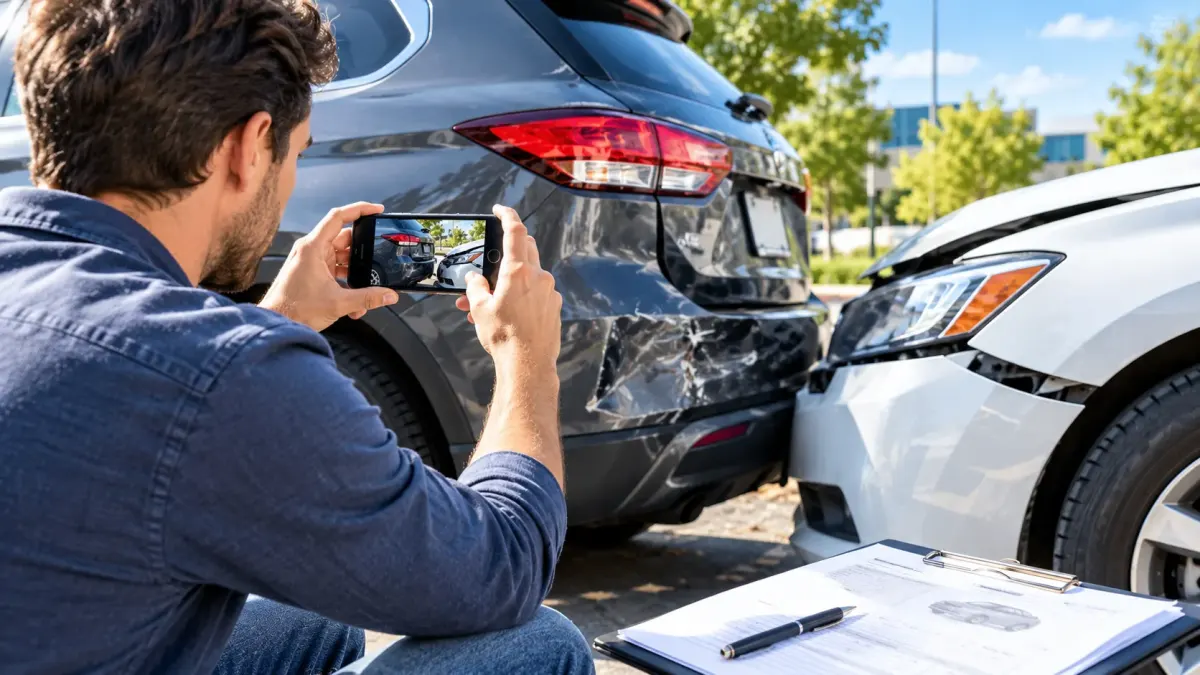
- Photos of the damage to both vehicles and the accident scene
- Two or three repair estimates
- Contact and insurance information exchanged at the scene, if any
- Witness names and contact information
- Any text, email, or written admission of fault
What If You Don’t Have a Police Report?
You can still file without one. A police report makes proving fault easier, but it isn’t a requirement to sue — photos, repair estimates, witness statements, and any written admission from the other driver can establish your case on their own. This matters most when the other driver initially seemed cooperative, or the damage seemed minor enough at the time that nobody called it in.
Realistic Expectations About Collecting
Winning your case and collecting on it are two different steps. If the other driver was uninsured, that can also mean they don’t have significant income or assets, which makes an unpaid judgment harder to collect regardless of how clear-cut your case was. See our guide on collecting money after winning for the actual mechanics — wage garnishment, bank levies, and what to do if they simply don’t have anything to take.
Common Mistakes
| Mistake | Why It Hurts | How to Avoid It |
|---|---|---|
| Suing only the driver when the owner is someone else | Misses a potential defendant who may actually have assets | Name both the driver and the registered owner if they differ |
| Assuming uninsured motorist coverage covers your car | It usually only covers injuries, not property damage | Check your policy for collision coverage or a UMPD add-on before assuming |
| Waiting because there’s no police report | Delays weaken evidence and your memory of the scene | Gather photos, estimates, and witness info even without a report |
| Naming the insurance company as the defendant | It isn’t a party to your case and can get it dismissed | Sue the driver and owner directly, not their insurer |
| Not saving a text admission of fault | You lose your strongest possible piece of evidence | Screenshot and print any message where the other driver admits fault |
| Expecting an easy collection from an uninsured driver | Someone driving uninsured often has few collectible assets | Go in with realistic expectations and know the collection process ahead of time |
Frequently Asked Questions About Suing a Driver Who Hit Your Car
Can I sue the driver who hit my car if they don’t have insurance?
Yes. An uninsured driver can still be sued directly in small claims court for the cost of your repairs. The challenge isn’t whether you can sue them, it’s whether they’ll actually be able to pay a judgment once you win.
Should I sue the driver, the car owner, or both?
Name both if they’re different people. The car’s registered owner can often be held responsible even if they weren’t driving, and naming both increases your chances of actually collecting if one has more assets than the other.
Does my uninsured motorist coverage cover my car?
Usually not. Standard uninsured motorist coverage typically pays for injuries, not property damage to your vehicle. Your own collision coverage, if you carry it, is more likely to cover the repair, minus your deductible — some states also sell a separate uninsured motorist property damage add-on.
Can I still sue if there’s no police report?
Yes. A police report helps, but it isn’t required to file. Photos, repair estimates, witness statements, and any written or text admission of fault from the other driver can all establish your case without one.
What if the other driver admitted fault by text but won’t pay?
That text is strong evidence. A statement from the other party, used against them, generally isn’t excluded as hearsay, and it can be one of the most persuasive pieces of evidence you bring to the hearing.
What happens if I win but the driver still won’t pay?
A judgment doesn’t collect itself. You may need to pursue wage garnishment, a bank levy, or other collection methods, and if the driver has no income or assets, collecting can take time regardless of how strong your case was.
Sources
- State small claims court self-help guides on suing after a car accident
- State auto insurance rules on uninsured motorist and collision coverage scope
- Individual state small claims guides on this site