A mechanic doesn’t get to keep billing you for work you never approved, and a bad repair doesn’t stop being their problem just because you already paid. Both situations are common — and both are winnable in small claims court, if you have the right paperwork before you walk in.
This guide covers what actually counts as a case against a mechanic, the estimate law most shops don’t follow, what to do if a shop is holding your car over a disputed bill, and exactly what evidence wins these cases.
Do You Have a Case Against a Mechanic?
Most mechanic disputes that end up in small claims court fall into one of four categories:
- The final bill exceeded the estimate without your authorization.
- The repair wasn’t done, wasn’t done correctly, or didn’t fix what you paid to fix.
- The shop damaged your car further while it was in their possession.
- The shop is holding your car over a bill you believe is wrong.
Legally, these usually rest on one of three theories: breach of contract (they didn’t do what they agreed to do, or charged more than agreed), negligence (they had a duty to repair your car competently and didn’t), or consumer protection (billing for work never performed, or exceeding an estimate without the authorization your state’s law requires). You don’t need to pick the “right” theory before filing — describe what happened on your complaint form and the judge applies the law that fits.
The Estimate Law Most Shops Don’t Follow
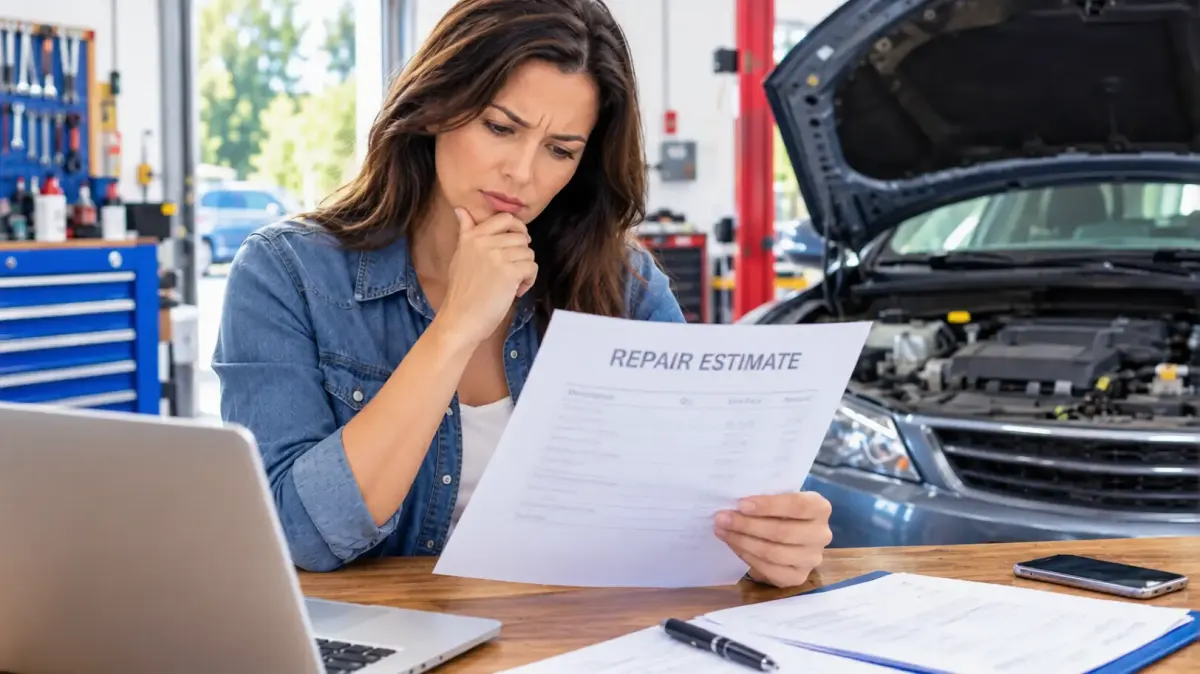
Most states require repair shops to give you a written estimate before starting work, and cap how far the final bill can exceed it without your sign-off — commonly around 10% over the written amount. If a shop calls partway through and you approve more work verbally, the law in most states requires the shop to document that authorization: the date, the time, and who gave it.
What to Do the Moment You Notice a Problem
- Don’t sign or pay yet if you can avoid it. Ask the shop to hold the bill while you get a second opinion.
- Photograph everything — the specific issue, the odometer reading, and the vehicle overall.
- Get a second opinion in writing from a different shop. A verbal “yeah, that’s wrong” won’t carry weight in court — a written assessment on letterhead will.
- Ask for your old parts back if you want them inspected — many states give you this right if you ask before the repair starts.
- Put everything in writing going forward — follow up any call with a text or email summarizing what was said.
If the Shop Won’t Release Your Car
In most states, a shop has a legal right — often called a mechanic’s or garageman’s lien — to hold your vehicle until the bill is paid, even if you dispute the amount. This can feel like leverage against you, but it usually isn’t worth fighting in the moment.
Evidence to Bring
- The original written estimate
- The final, itemized invoice
- Before-and-after photos of the vehicle or the specific issue
- A written second opinion or inspection report from another shop
- All texts, emails, or written correspondence with the shop
- Receipts for any repair needed to fix the shop’s mistake
- A copy of any complaint you filed with a state regulator
Before You File — Two Moves That Strengthen Your Case
File a complaint with your state’s auto repair regulator. Many states license repair shops through a specific agency — California’s Bureau of Automotive Repair and New York’s DMV Consumer Complaint Unit are two examples. A complaint sometimes resolves the dispute on its own, and it creates an official record you can point to in court.
Send a demand letter. A written demand — stating what happened, what you’re owed, and a deadline to respond — often resolves the dispute before you ever file, and it’s typically expected before a judge will hear the case. See our demand letter guide for exact wording.
Naming the Right Defendant
Sue the business, not just the individual mechanic who worked on your car, unless the shop is a sole proprietorship. Check the sign, the invoice, or your state’s business registry for the shop’s exact legal name — suing “Joe’s Garage” when the registered entity is “JMR Automotive LLC” can get your case dismissed on a technicality you can easily avoid.
Common Mistakes
| Mistake | Why It Hurts | How to Avoid It |
|---|---|---|
| Paying without an itemized invoice | No record of what you were actually charged for | Get an itemized final invoice before or when you pay |
| Getting only a verbal second opinion | A judge can’t weigh an opinion that isn’t documented | Get it in writing, ideally on the second shop’s letterhead |
| Waiting weeks to document the issue | Makes it easy to argue you caused the problem afterward | Photograph and get a second opinion within days |
| Suing the mechanic instead of the shop | Can lead to dismissal for naming the wrong defendant | Confirm the shop’s registered legal business name first |
| Assuming a verbal deal doesn’t count | People skip solid claims thinking they need a signature | Verbal authorizations are enforceable — document them after the fact by text |
| Not checking the overage rule | Missing a state-law violation that strengthens your case | Check your state’s cap on unauthorized overages before filing |
Filing and What Happens Next
File in the small claims court in the county where the shop operates. The shop must be formally served — you can’t serve the papers yourself. Most hearings are informal and short, often 15 minutes or less, and both sides typically show each other their evidence before the judge sees it. See your state’s small claims guide for the exact filing fee, dollar limit, and required forms.
Frequently Asked Questions About Suing a Mechanic
Can I sue a mechanic for a bad repair job?
Yes. If a mechanic performed the repair negligently, didn’t fix what they charged you for, or caused new damage to your car, you can sue for breach of contract or negligence in small claims court. You don’t need an attorney, and most cases fall well within small claims dollar limits.
Can a mechanic keep my car if I don’t pay the bill?
In most states, yes — this is called a mechanic’s or garageman’s lien, and it lets a shop hold your vehicle until the bill is paid. If you dispute the charges, you can still pay to get your car back and then sue afterward to recover what you believe you were overcharged.
Do I need a written contract to sue a mechanic?
No. Verbal repair authorizations are legally enforceable everywhere. A judge can rely on your account of a phone call or conversation, especially if it’s backed by a text, email, or invoice referencing the same work.
Can a mechanic charge me more than the estimate?
Generally only within a limited margin, and only with your authorization. Many states cap unauthorized overages around 10% above the written estimate. Charges beyond that without your sign-off may violate state consumer protection law on their own.
What evidence do I need to sue a mechanic?
Bring the written estimate, the final itemized invoice, before-and-after photos, a written second opinion from a different shop, and copies of any texts or emails with the shop. A second mechanic’s written assessment is often the single most persuasive piece of evidence.
How much can I sue a mechanic for in small claims court?
Up to your state’s small claims dollar limit, which ranges roughly from $2,500 to $25,000 depending on the state. Check your state’s small claims guide for the exact limit and filing county.
Sources
- State automotive repair act statutes and consumer protection agencies (e.g., California Bureau of Automotive Repair, Washington State Attorney General, Florida Department of Agriculture & Consumer Services, Illinois Attorney General)
- Individual state small claims guides on this site
- State-specific small claims court self-help resources
Keep Reading
Once you’ve got your evidence together, here’s what comes next: